Rhodes College is a place like no other for providing students the opportunity to leave the confines of the classroom and go into the community to conduct interviews, work in archives, or collaborate with other researchers. Students gain graduate-level research skills during their undergraduate years, also preparing them for graduate, law, or medical school.
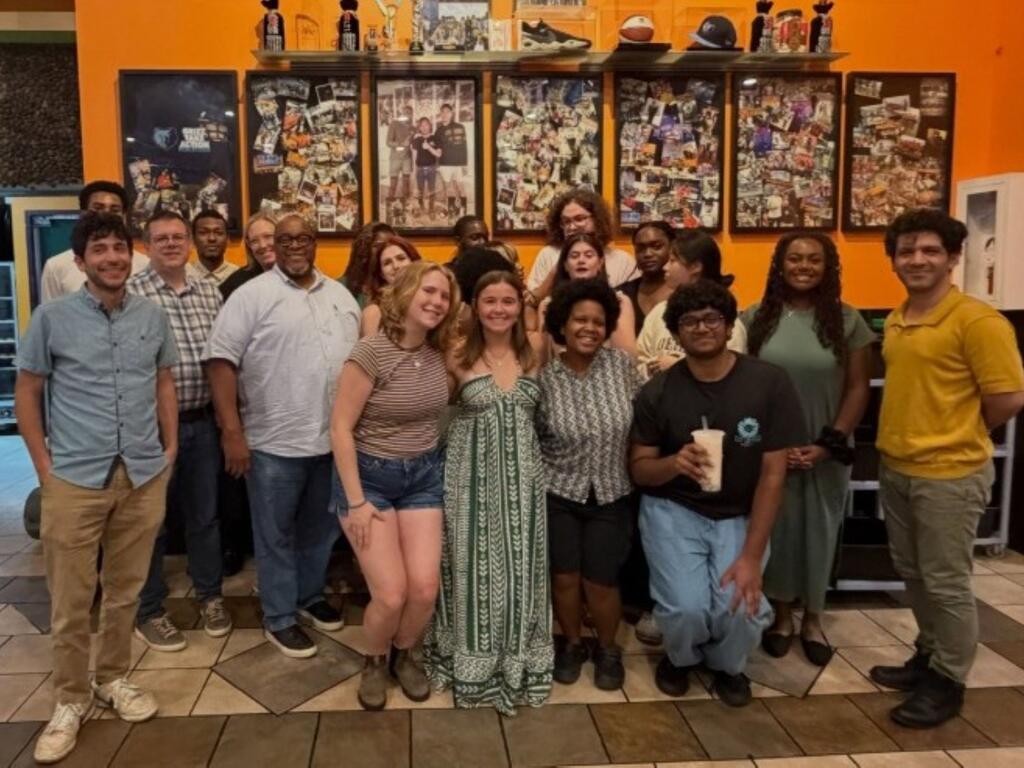
This summer, 17 fellows participated in the Rhodes Institute for Regional Studies (RIRS), one of the college’s innovative programs where students capitalize on their liberal arts education and explore Memphis and the Mid-South through research. It operates under the auspices of the Lynne & Henry Turley Memphis Center for Community Engagement.
In the eight-week program, fellows receive a stipend, campus housing, F11 credit, close faculty mentoring, and hands-on experience crafting independent research papers, documentaries, or digital media projects.
“Seventeen bright, inquisitive, thoughtful students. Six dedicated faculty. Together we created something truly beautiful—a vibrant, rigorous, nurturing intellectual community,” said Dr. Charles Mckinney, director of RIRS.
Research projects are archived in a digital collection and frequently serve as the foundation for senior capstones and community engagement. Additionally, participants leverage faculty mentorship and networking for postgraduate opportunities, graduate school, or public policy careers. Past participants also have used their research portfolio to win competitive national awards.
Memphian J'oules Williams ’28, who is pursuing a major in international studies and Latinx/Latin American studies, completed the research project through RIRS titled “Local Lives, National Policies: The Interplay of Immigrant Experience and Activism in Memphis,” alongside international studies major Hajin Park ’28.
“Through conversations and interviews, we gained extensive knowledge about activism, immigrant activism, and the political structure of Memphis, law, and local services,” said Williams. “Our faculty mentor, Prof. Hadi Khoshneviss, was extremely encouraging and supportive throughout each phase of this research. His connections within the city helped us have insightful interviews with activists and attorneys who engage with immigrants every day. Hajin and I both brought knowledge from previous classes that overlapped with this research, making it fun to blend it into a paper. To me, collaboration fosters the opportunity to exchange ideas, strategies, and approaches, ultimately producing work that would not have been possible alone. I plan to use this research for my senior seminar to compare where Memphis is at two to three years out, focusing on policy.”
Lexi Boateng ’27, an English major from Woodbridge, VA, focused her research project on literacy in Memphis and Tennessee. “Interviews were part of the primary sources for my research, and my interviews with Memphis-based literacy nonprofit professionals gave me special insight into the strategies that they use for reading interventions with Memphis students,” she said. “I plan to submit my research as part of grad school applications/fellowships.”
For her final RIRS presentation, Sienna Collier ’27 presented “Federal Deregulation, and XAI; a Look into the Lack of Enforceable Environmental Policy in the United States.”
“My participation in the Rhodes Institute of Regional Studies was truly one of the most fulfilling and meaningful projects I have had the pleasure of working on throughout my time at Rhodes,” said Collier. “I come from a very tight-knit and supportive community in Charlottesville, Virginia, and it was fantastic to be able to spend time exploring a topic that feels pertinent and important to the community right here in Memphis. As a politics and law major, I knew I wanted to study something related to our legal system, and I have always been extremely interested in our system of environmental laws. The institute provided me with the perfect opportunity to do so. My research focused on the last two decades of environmental precedent and legislation, and how this is affecting the current legal climate in which the xAI plant in Memphis is being litigated. I hope to use this research as an example of my scholarship as I pursue a Juris Doctor post-grad, and I am so thankful for the support of my cohort throughout this summer.”