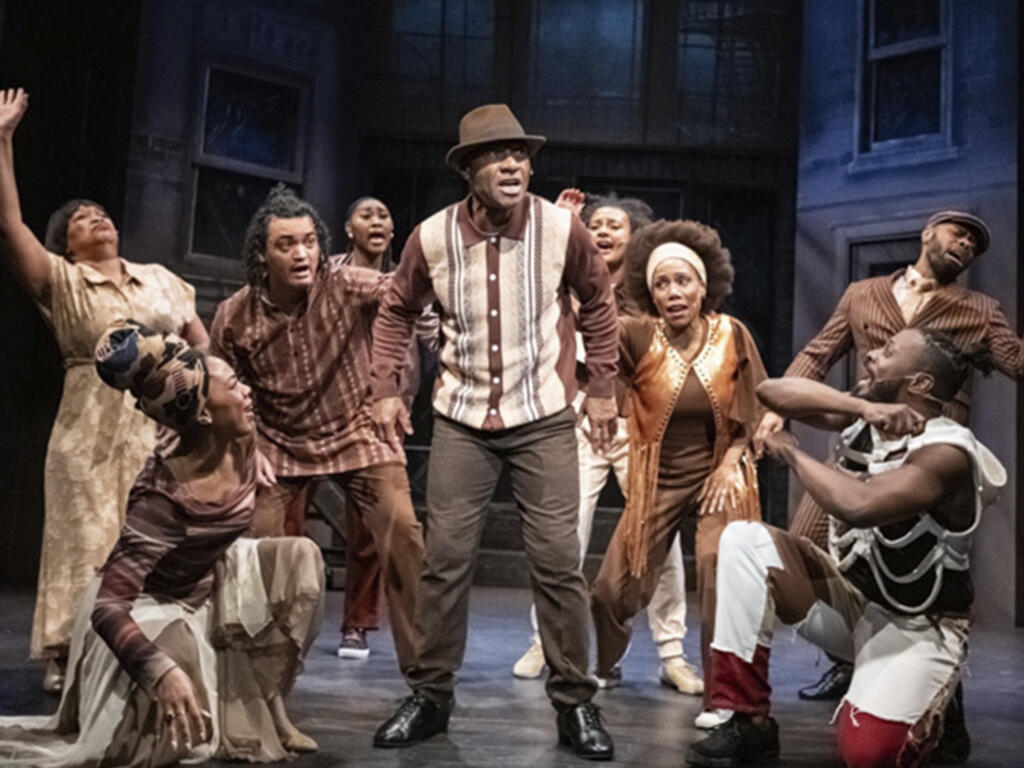
By Sam Cicci '15
Do you remember where you were when you decided what you wanted to do with your life? Sometimes the decision is made in the Rhodes career center; for some, it’s decided at a very young age. Or, perhaps, the moment of clarity dawns during a conversation with classmates, or following a simple rejection, or during an intensive cross-country trek, throwing open the door to numerous possibilities. Many alumni finding success in the performing arts have taken the road less traveled towards their careers, pivoting away from successful (and stable) careers in advertising, business, and corporate life to fulfill their ambitions. And on stage, under the glow of the spotlight, four alumni have found it all to be worth it.
On Stage at the Comedy Club
Comedian Seth Herzog ’92 did a heck of a lot of things growing up. He acted in numerous amateur and professional dramatic theater productions, played football, rode crew, and ran track. At Rhodes, he embraced the liberal arts lifestyle, hanging out with friends, relating his classroom experience to history and culture while studying abroad in Europe, and writing plays and auditioning for roles in the Rhodes Theatre Guild. But the one thing he didn’t do was stand-up comedy. “I had considered myself not just a comedic actor, but a serious theater and film guy who also could do comedic roles,” says Herzog. He would elicit much laughter during crowd interactions after shows and when making jokes to students around campus, but had never organized a formal set.
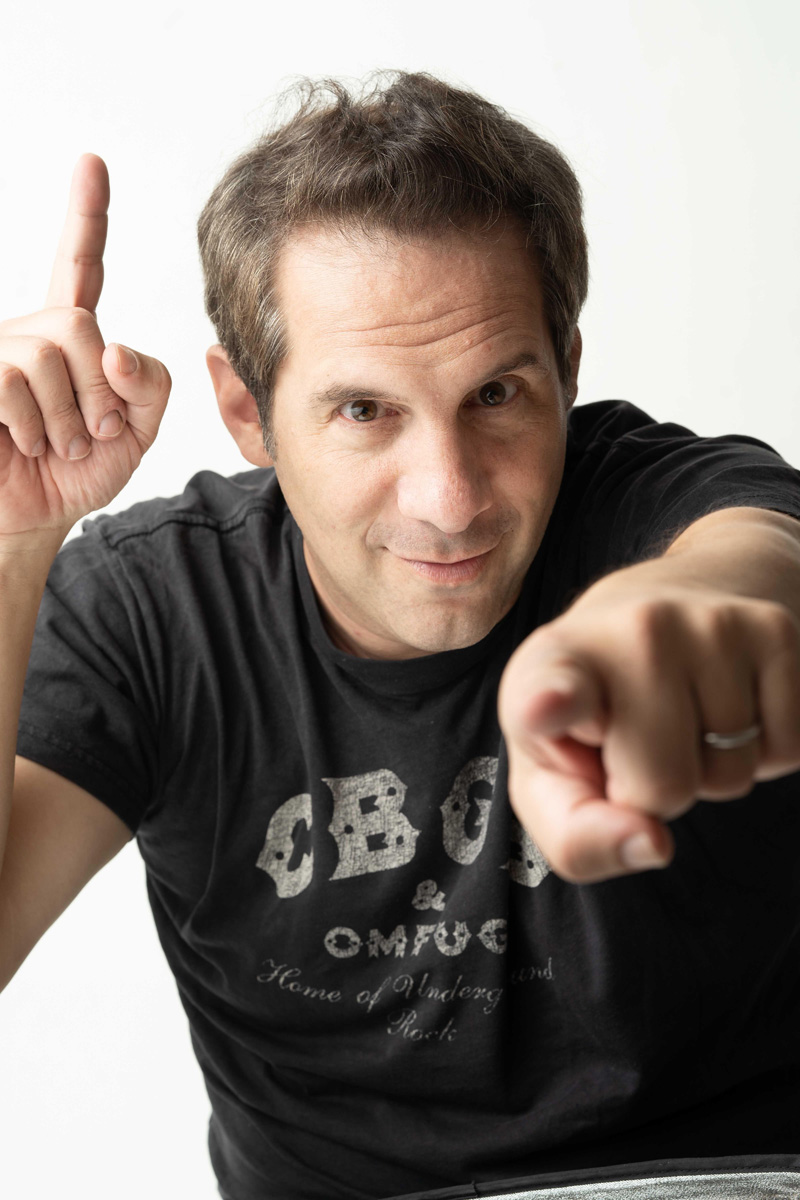
With his sights set on a serious acting career, he sat down with longtime former Rhodes theater professor Cookie Ewing, who told him he should change his focus. “She told me, ‘Do comedy, you’ll be much happier.’ And I said ‘What, how dare you? I’m an actor.’”
But Ewing’s advice would prove correct. Herzog moved to New York City shortly after graduation to pursue a role in theater. Then, a few friends who performed on the MTV sketch comedy show The State invited him to perform at comedy clubs. He found joy in performing and producing these shows, and eventually decided to forego acting to be a full-time comic. “Once I made that decision, doors started opening,” he says. “I started booking and producing more shows, and once I became a stand-up, people assumed I was also a writer, and I got a lot of writing gigs.”
Herzog made frequent appearances on the talking-head-style shows popular in the late 1990s and early 2000s, with steady roles on the VH1 network. Meanwhile, many of his New York actor friends had also hit it big. Saturday Night Live alumnus Jimmy Fallon, having spent a few years looking for his next big thing, reached out to Herzog with an opportunity. “We’d been hanging out more for a few years after his run on SNL, and in 2009 he was planning to launch Late Night with Jimmy Fallon and asked me to come on and be the warm-up comic.”
Herzog was hesitant, but eventually accepted, becoming a fixture of the show, and is now on Fallon’s current program, The Tonight Show starring Jimmy Fallon. For the last 17 years, Herzog has elicited plenty of laughs from audience members to get them in the mood before the cameras start rolling.In between tapings, Herzog has maintained a steady routine of other shows and projects. He’s led movies, appeared on tv shows such as 30 Rock, and also headlined large events. He is a frequent performer at The Big Slick fundraising event in Kansas City, taking the stage alongside Paul Rudd, Jason Sudeikis, David Koechner, and Heidi Gardner, to name a few.
Since 2004, Herzog has produced his own stand-up variety show called Sweet, showcasing various celebrity guests and the unique brand of comedy that has made him a fixture of the New York scene. Historically, he has always incorporated lots of zany dancing and musical bits; one of his highlights is a dance to the Wonder Woman theme, wearing a version of Lynda Carter’s iconic costume. He also frequently invites his mother on stage for a bit of repartee. Whatever the approach, Herzog says it’s important to keep at it. “There are no more gatekeepers, and the means of production are in your pocket,” he says. “So make your own stuff, keep creating and producing, because no one’s going to remember what bombs; they’ll remember the two or three things that hit.” Those moments that do hit make the comedic grind all worth it for fellow comedian (and occasional Herzog collaborator) Paul Ollinger ’91. The high is such that it persuaded him, in the midst of a highly successful business career, to switch gears and take to the stage full time. “I was always into comedy, but it was never something that I thought I would do,” he says.
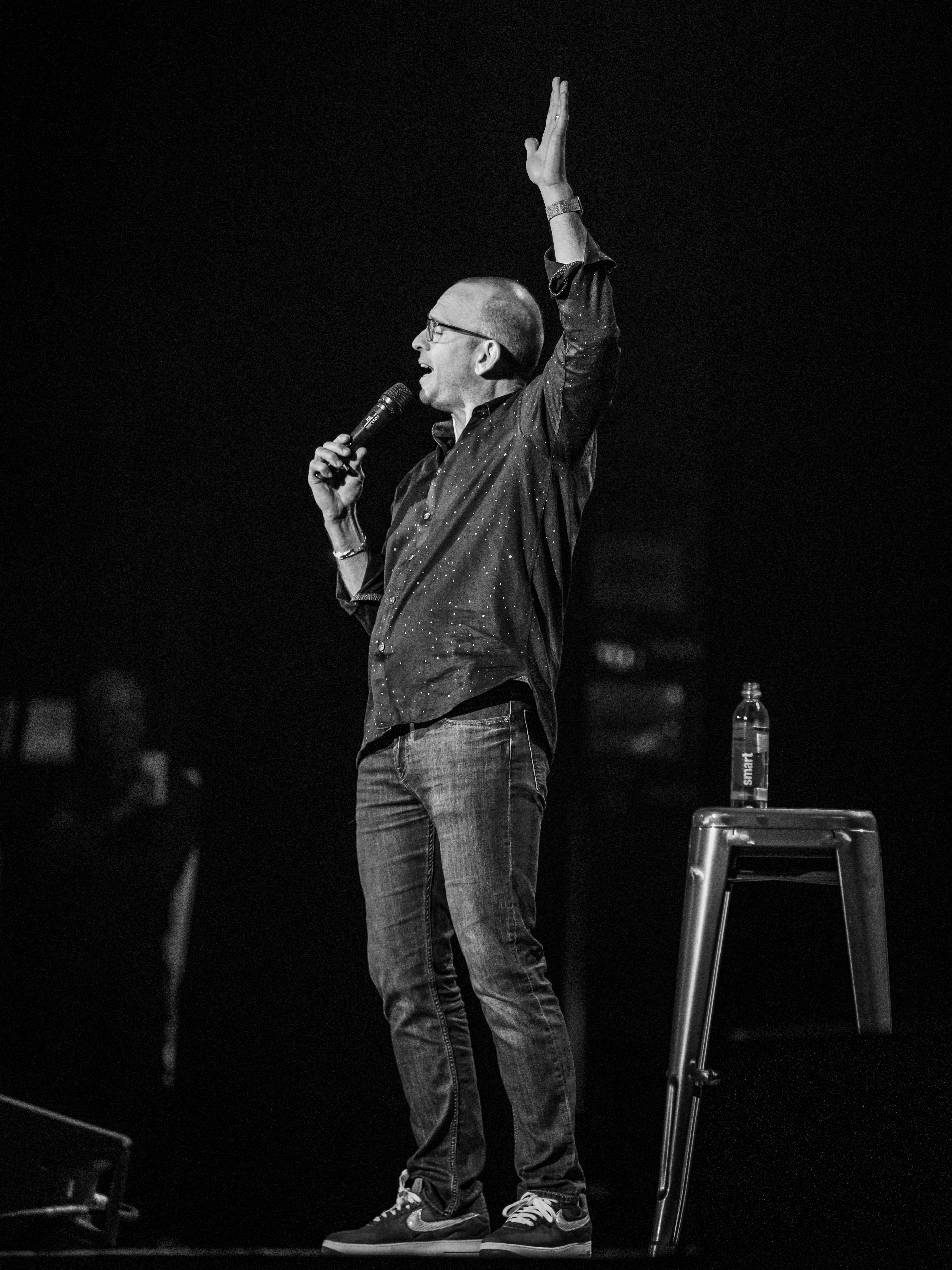
Ollinger arrived at Rhodes to play football thanks to some persuasion from longtime Rhodes Athletics administrator Mike Clary ’77, P’01, P’04, taking to the field while working towards a business and economics major. After graduation, he worked in the Rhodes Development office for several years before pursuing a Master’s degree at Dartmouth’s Tuck School of Business. “I wanted to be a bank loan officer and drive a Buick LeSabre and have an office with a credenza,” says Ollinger. “That’s what success looked like to me before, and I aspired to that upper-middle-class success; nowhere in there was being a comedian.”
But his attitude changed when a friend at Dartmouth asked him to co-headline a school talent show. With Ollinger known as a “smart aleck” around campus, the friend thought he would bring a good energy to the proceedings. But Ollinger raised the bar and had the whole crowd in tears. “It was some good-hearted ball-busting, just poking fun at him,” says Ollinger. “And as it continued I thought, ‘Wait a minute, this is stand-up comedy. And I want more of that.’
“It’s a semi-narcotic experience,” adds Ollinger, “And when you do it, they say you get the bug, because your brain just lights up with joy when it goes well.”
He certainly caught the bug, and despite having his sights set on the business world, he kept thinking about his comedy. But first, Ollinger took part in a few other notable ventures. He joined the small music website launch.com before it was purchased by Yahoo, and then decamped to Los Angeles to kickstart his comedy career. He began performing in shows, met his wife, Stacy, and tried to chart a path towards a sustainable performing career when a friend from Yahoo called. “He asked if I’d like to join a small social network called Facebook,” says Ollinger. “It seemed like a good gig, and I joined up and became the 250th employee there.”
But after four and a half years of business development at Facebook, Ollinger felt financially stable enough to be a comedian full-time. “I always say I left Facebook too early, but at that time it felt that if I had a dream that I knew I wanted to follow and was stable enough to do so, it was a dereliction of opportunity to not pursue that dream.”
Ollinger brings an openness and authenticity to his acts that call on his life experience and trials in the early days of online startups. His comedic chops have taken him to clubs around the country, earned him a finalist’s spot at the Boston Comedy Festival, and even garnered him a slot opening for the rock band Styx. He also explores his and others’ professional journeys on his Reasonably Happy podcast—billed as “the skeptics guide to finding contentment”—talking life and financial success versus fulfillment with Nobel Prize winners, former Olympic skater Apolo Ohno, PGA Tour champion Rich Beem, celebrities such as LL Cool J and Judd Apatow, and plenty of other luminaries. But 30 years on from his first show, it’s that same performance high that drives Ollinger, just like it did at the Dartmouth talent show. “It’s the same feeling: you want to do more of it, you want to do it every day, you want to get better and you want to be the best in the club that night.”
On Stage at the Theater
Four days into bicycling the 1996 500-mile Heartland AIDSRide from the Twin Cities to Chicago, Doug Trapp ’85 pedaled to the top of a large hill and stopped for a moment to gather his thoughts. He remembered a conversation with his best friend at the Twin Cities Gay Men’s Chorus, where Trapp confided that his dream was to be on Broadway.
“I was riding for a friend of mine who has since passed on,” says Trapp. “And at the top of the hill I thought, ‘Life is just too short not to do what I want to do with it.’ And I burst out crying, riding down the hill with happy tears, realizing that I had to quit my job.”
As a lifelong singer and actor, Nashville native Trapp had traveled the three hours down I-40 to begin his undergraduate life at Rhodes, eager to perform. He joined the Rhodes Singers under Professor Tony Lee Garner ’65, P’91 (and sang alongside current professor of music Carole Blankenship ’85) and performed in productions at McCoy Theatre and around Memphis. “I had always been into musical theater,” he says. “My dad was a naval officer stationed in Staten Island in the 1960s, and my parents were huge fans of Broadway, so I grew up listening to the original cast albums from Cabaret, Fiddler on the Roof, Man of La Mancha …”
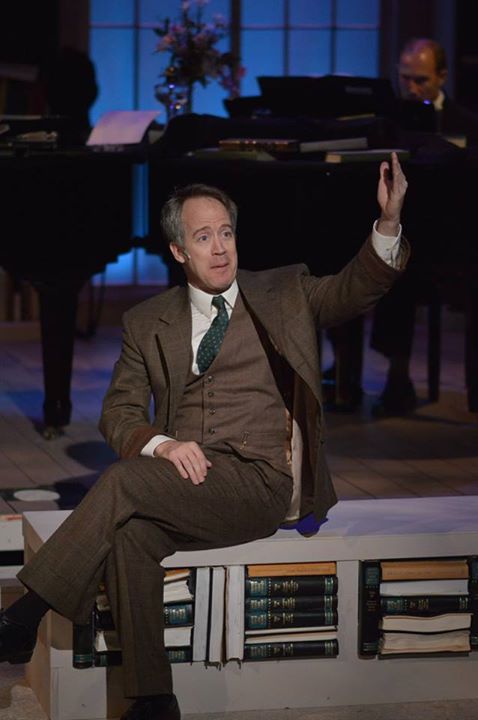
As a self-professed theater geek, Trapp was unsure what his career path would look like. “Theater and singing were hobbies, not what I was thinking about as a career,” he says. “The nice thing about Rhodes was that I could try a lot of things and see what worked for me.” He quickly discovered that design and illustration were excellent creative outlets for him, and pursued his post-graduate studies at the Portfolio Center in Atlanta with an eye towards working in advertising.
He built a successful career, starting work in South Carolina before relocating to Minneapolis, MN, which ended up being the perfect landing spot. “Minneapolis was one of the places, in the late ’80s, to be doing really creative work outside New York, Los Angeles, the usual spots.” Alongside working as a creative director, Trapp joined the aforementioned Gay Men’s Chorus and, realizing that he really missed acting, used that as a springboard to get back into theater. His acting existed in tandem with his advertising work until that fateful bike ride. After completing the 500 miles, muscles sore and resolve solidified, he started planning for a theater career. In 1998, he walked into his boss’s office and said he planned to pursue theater full time. “I remember he said, ‘Oh, that’s great.’ Then he pulled out a dollar from his wallet and said ‘Let me know if you want to see one of these again,’” recalls Trapp with a laugh. “And I did continue freelancing for them, but all my coworkers, boss included, were really supportive of my decision.”
Trapp spent five years acting consistently in Minneapolis before taking the plunge and moving to New York City. “My big break came with an off-Broadway production called Silence! The Musical, a musical version of Silence of the Lambs.” Trapp was the swing—or understudy—for five different roles in the musical. “It was brutal, but a great crash course in being part of such a buzzy production, and I loved being around Broadway royalty.
Broadway itself hasn’t happened yet, but I’m still auditioning for shows and you never know.”
But Trapp didn’t only focus on theater. He also sought auditions for television and film, landing some pretty impressive spots. One of Trapp’s highlights was being cast on 30 Rock as Liz Lemon’s (Tina Fey) accountant, Howard. “My first big break and I was doing a scene across from Tina Fey . . . I was lucky, my confidence was sky high after preparing for the five roles of Silence. I thought, ‘I can do this.’ This changed my life and really launched my TV career. But working alongside Tina was amazing, and that really solidifed my kind of career as a character actor on TV.”
Trapp’s list of credits are impressive, and include being lambasted by Rami Malek on Mr. Robot and tortured by Queen Latifah on The Equalizer, along with memorable roles on Unbreakable Kimmy Schmidt, The Blacklist, and plenty of others. And Trapp doesn’t regret a single step on his current path. “Acting has given me so much,” he says. “It introduced me to my partner of 27 years now. Everybody’s path is the way it is. You take the victories you get; I haven’t felt so good about my work in a long time as I do now. My path has led me to a place where I feel sharp, I feel prepared, and I feel flexible to take on a role as needed.”
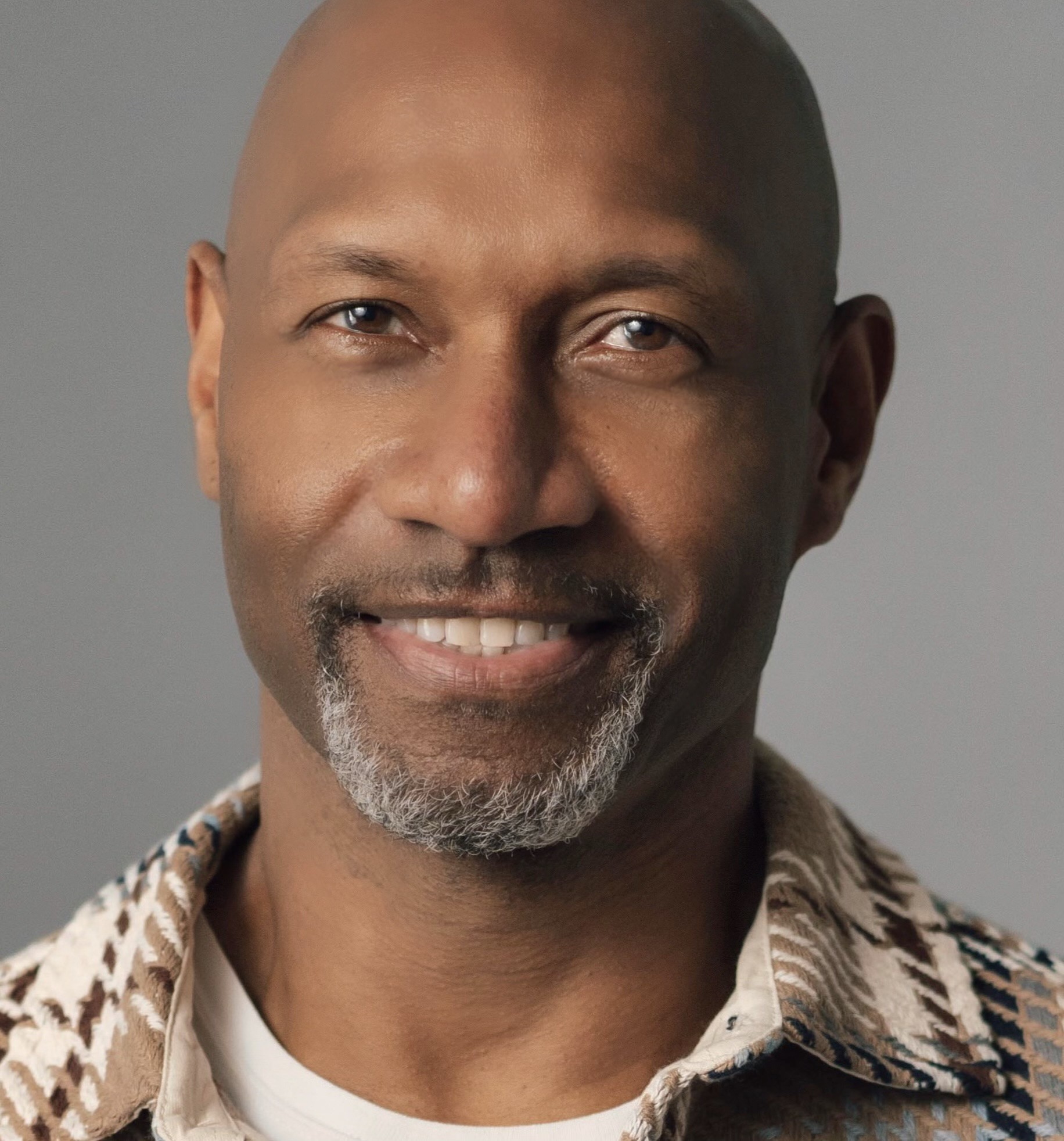
Fellow stage actor Charles Holt ’89 had a similarly winding path to acting as Trapp. In fact, his initial urge was to pursue a career in professional sports, having been recruited to Rhodes for football. When he switched tack to join the corporate world, he secured a job at IBM in Memphis for two years before moving to a new company in Atlanta.
“These corporate cultures weren’t really places I was suited for,” recalls Holt. “And I got fired a year after I moved to Atlanta, which was actually a blessing in disguise.” In between working two jobs to make ends meet, Holt started attending an open mic night, drawing on his experience singing in his church choir while growing up. “A gentleman, heard me singing one night and asked if I’d done musical theater and I said no way, I’m a football guy,” says Holt. “But I found myself interested in hearing more about theater, and I auditioned for a production he was working on. He’s still a mentor, and I acted in his production of Don’t Bother Me, I Can’t Cope just earlier this year.”
Holt quickly jumped into community theater, working on plenty of shows in Atlanta and building his resume before a 1995 role in Black Nativity really brought him to wider attention in the city. But Holt credits a lucky break for reaching the next level. The Alliance Theatre in Atlanta was preparing to perform James Baldwin’s The Amen Corner, directed by Tony-winning director Kenny Leon, but an actor dropped out weeks before the show. “Someone recommended me to Kenny, and he called me up and said, ‘You don’t have time to audition, can you do this?’ I said ‘yes,’ and he said, ‘You can join under one condition. And that’s you better be good.’”
Holt fulfilled the role successfully, and during the run, sitting in his dressing room one night, a voice told him “It’s time.” He booked a ticket to New York for a month to try his luck on Broadway. Near the end of the month, he booked a role on the national tour of Jesus Christ Superstar. His star quickly rose from there, earning roles on Smokey Joe’s Café, touring Europe as the first Black actor to portray Rocky in The Rocky Horror Show, and then returning home to land a lengthy run in The Lion King on Broadway, in what was an absolute theater juggernaut just after the turn of the millennium.
“Every production changed my life, but that was such a phenomenal show,” he says. “And after, I thought, ‘I want to do even more, so I looked into TV, I looked into voice acting. I do motion capture for video games, and I also started writing. There are just so many ways to express myself, to tell stories. My path has been quite meandering; it’s been full of weeds and bobbles, but I’m grateful for the journey I’ve had and where I am.”